
Highland Park Directory Collections
Highland Park has a layered directory shelf, not an unbroken annual set. The Highland Park Public Library digital collection supplies nine scanned telephone books from 1908 through 1913. The Highland Park Historical Society catalog describes about seven cubic feet of telephone directories spanning 1890 through 2014, with gaps. The library house-history guide also identifies local street directories for 1919, 1922, and 1951, plus Highland Park entries within broader Waukegan or Evanston volumes.
| Collection | Years represented | Where held | Access |
|---|---|---|---|
| Telephone books | 1890-2014, incomplete; 1908-1913 digitized | Historical Society and Public Library | Catalog, archive visit, or free scans |
| City and street directories | 1901-1925 broader run; local 1919, 1922, 1951 | Library and Ancestry Library Edition | Library access; early local books arranged by occupant |
| Newspaper and obituary indexes | News index 1874-2010; obituaries 1874-2009 | Public Library | Online index, digital text, microfilm, or scan request |
| Sanborn maps | 1900, 1907, 1912, 1918, 1924, 1933 | Library and Library of Congress | Digital discovery and local-history help |
| Local papers, maps, and photos | 1800s to present | HPALHC | Catalog research and in-library use |
The dates describe located holdings, not a promise that each year survives. Publication gaps, regional editions, and books filed under a nearby city all matter. Record the full title and publisher shown on the scan before deciding that two books belong to the same run.
Highland Park Directories Online
The library's digitized run includes April and August 1908, February and November 1909, March 1910, October 1911, October 1912, and April and July 1913. These scans are the cleanest starting point for an early Highland Park name because the source page identifies each book. Search may still fail when type is faint or a surname is abbreviated. Browse the alphabetical pages and save the page image when text search misses.
The digitized telephone-directory page shows the files and dates.
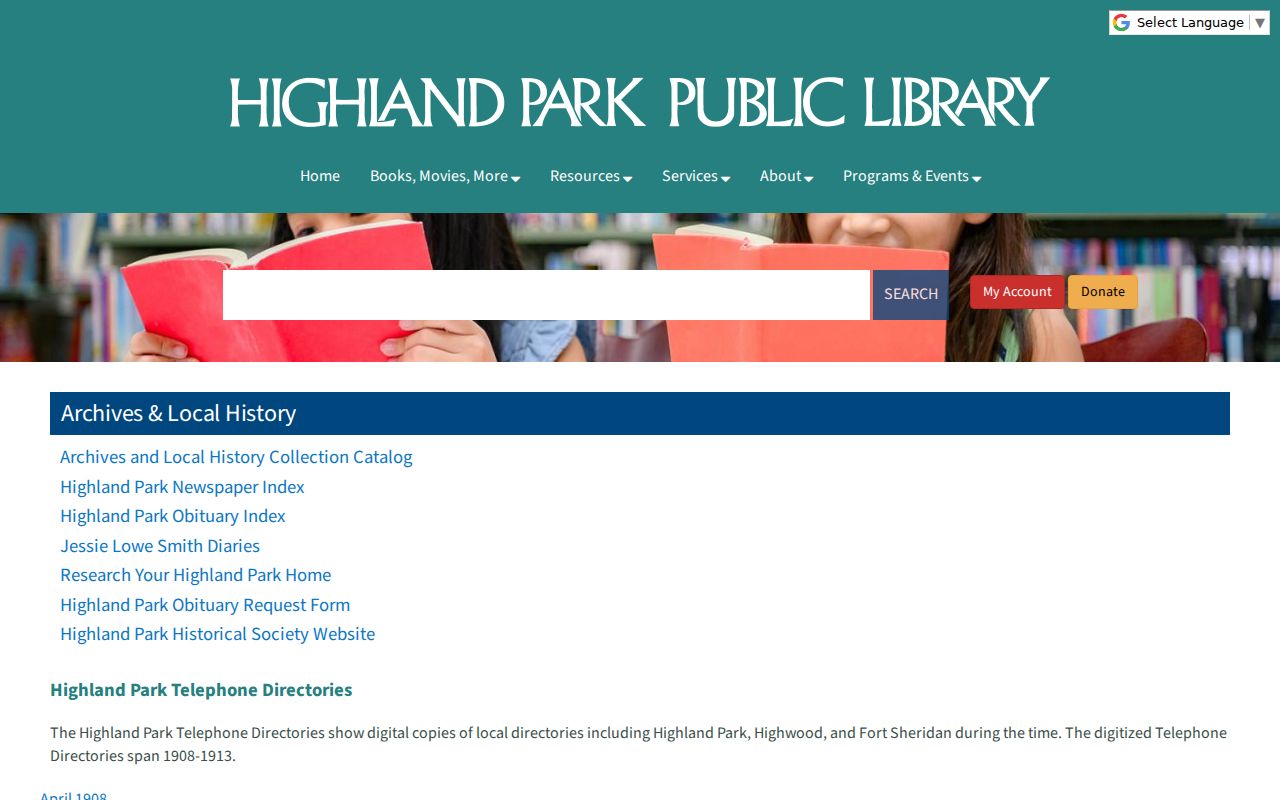
The collection landing page is also the best place to see whether a corrected scan or newly described volume has replaced an older link. For later books and broad databases, library access matters. Ancestry Library Edition contains United States city directories from 1822 to 1989, including the regional volumes cited in the local guide. The Historical Society catalog supplies collection-level descriptions when a book is not online.
Read Highland Park Directory Entries
The April 1913 book places the telephone number to the left of the name and sorts entries alphabetically. Labels such as Residence, Office, and Business state the role of an address. One physician appears with separate office and home entries, a useful warning against merging two lines into one household. Institutions, banks, hotels, city offices, and managers appear beside personal subscribers.
| Printed element | What to preserve |
|---|---|
| Name | Spelling, initials, title, and exact placement |
| Telephone | The exchange or number printed at the left |
| Entry label | Residence, Office, or Business |
| Address | House number, street form, and each abbreviation |
| Associated role | Manager, municipal officer, business, or institution when stated |
- Criss-cross directory
- A directory arranged by street or telephone number rather than only by surname.
- Householder index
- A name list focused on the person shown at an address, not everyone there.
- Abbreviation key
- The book's list explaining short forms for streets, roles, and places.
- Subscriber
- The person or organization tied to service, which may not equal a whole household.
Photograph the title page and abbreviation key along with the entry. That small step keeps street and role labels from being expanded by guesswork later.
Highland Park's Split-Address Clue
A 1913 Highland Park city directory entry can separate a person's office from a residence. This local quirk is useful, but it can also create a false move. Keep each printed line distinct until a second record connects them. A business address may explain why a name appears on a central commercial street while the residence sits elsewhere.
The Historical Society directory description shows how far the collection extends.
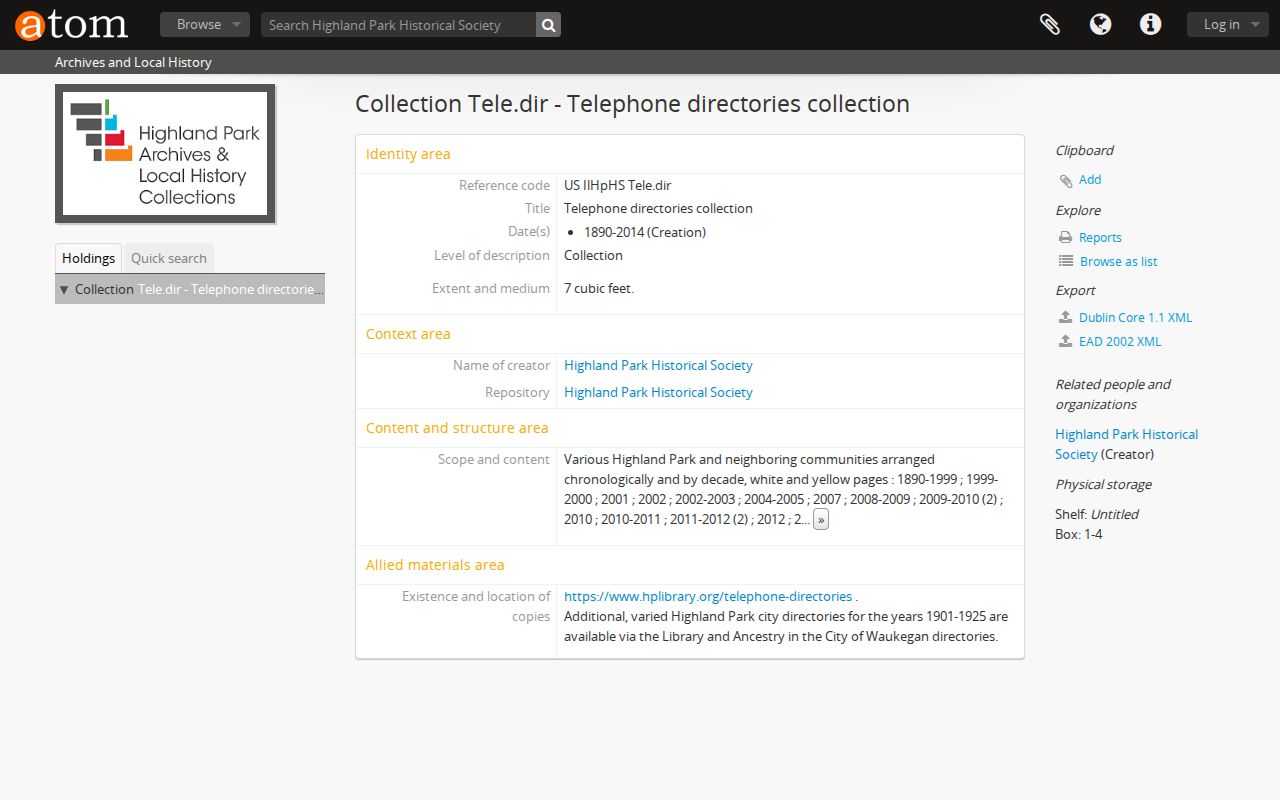
The long collection span bridges the early scans and books that still require an archive or library visit. Do not merge office and home lines merely because the same name appears on both.
Trace Highland Park Families Yearly
Directories help fill years between federal census schedules. The latest fully released decennial census is 1950 under the 72-year rule, so city books can narrow a move to a shorter span. Follow the evidence in order and leave each missing year marked as unknown.
- Choose a known name, year, or address and search the nearest volume.
- Copy the entry exactly, including initials, spouse reference, number, role label, and page.
- Move one available volume forward and backward. Note moves, spelling shifts, and absences.
- Compare a census year with the nearest directory using that year's boundary and street name.
- Check newspaper or obituary indexes, then use a deed when ownership is the question.
A missing entry can mean no subscription, a move, death, a regional filing choice, or an index flaw. It does not prove the person left Highland Park. Modern address records belong in the Highland Park street directory, where parcel and deed sources can be judged on their own terms.
Highland Park's 1950 Number Change
Highland Park streets were renumbered in October 1950. Newspaper indexes from 1949 through 1951 record concern about confusing numbers, the grid plan, homeowner notices, and later city action on street names and numbering. This makes the 1951 directory a useful bridge. A pre-1950 house number should not be pasted into a modern search and treated as unchanged.
The library's house-history guide gathers the directory, map, tax, and building sources needed to connect old and new numbers.
Save an evidence card with both numbers, any changed street name, the directory year, and the page or newspaper citation. That prevents an old address from being mistaken for a different building.
Note: The 1950 renumbering is a search bridge, not proof that the same family stayed in the property.
Highland Park Directory Name Follow-Up
A bare directory line gains context through local papers. Highland Park News indexing begins in 1874 and extends to 2010. Full digital text covers 1874 through 1922, while later issues rely on microfilm. Highland Park Press holdings run from August 1912 to September 1951 at the local library and the Abraham Lincoln Presidential Library.
The Highland Park newspaper index is the discovery point for names, businesses, civic events, and address changes.
Use the newspaper date and page, not just an index summary. A meeting, sale notice, celebration, or building item may explain why a directory entry changed without proving who occupied a home.
Highland Park Obituary Directory Trail
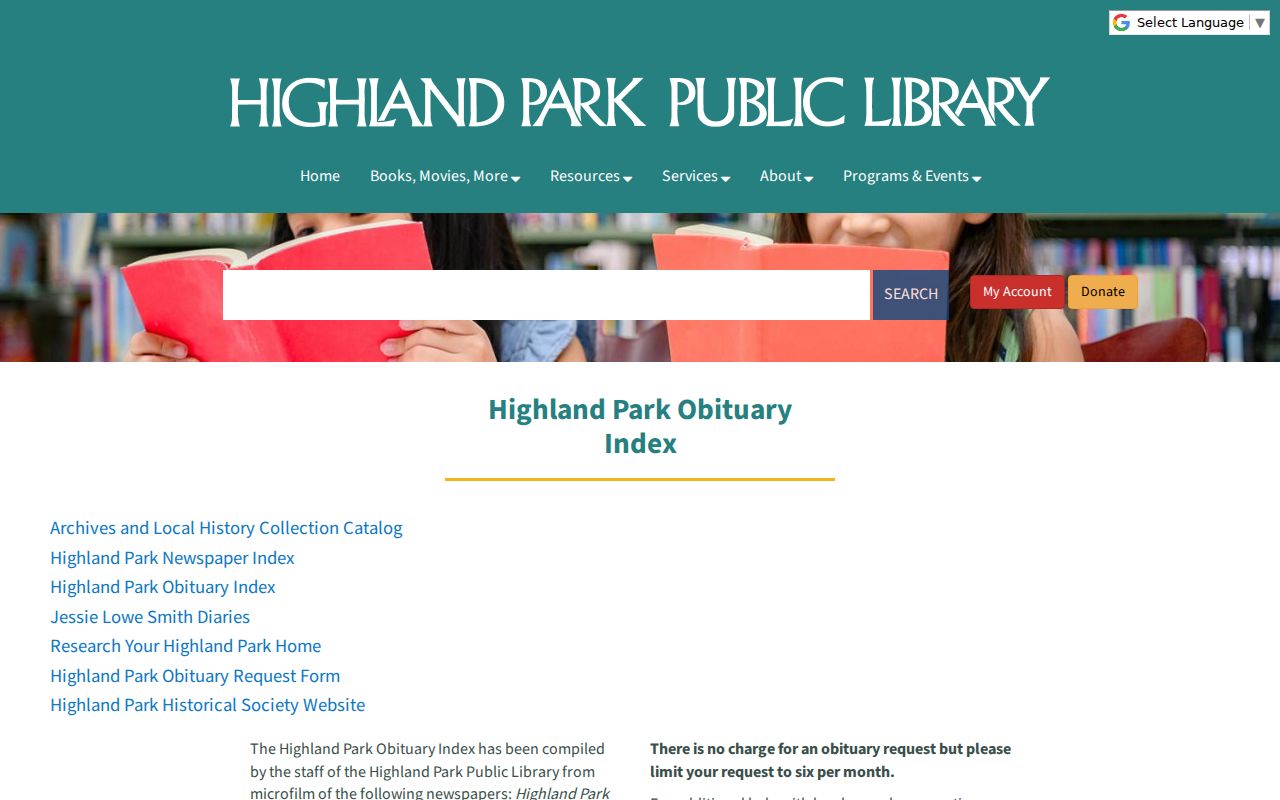
The library obituary index covers several local titles from 1874 through 2009, with a stated gap on July 31, 2008. Researchers may request scans by email, fax, or postal mail. The library states a limit of six requests per month and does not state a charge. An obituary can confirm relatives, a prior address, or a death date after a name disappears from a city directory.
The Highland Park obituary index explains the request route.
Keep the newspaper title, date, and scan together. An index match alone is not enough when two people share a name.
Highland Park Archives Beyond Directories
The Highland Park Archives and Local History Collections hold family interviews, papers, correspondence, maps, photos, government and organization records, and material tied to Ravinia and Fort Sheridan. Other resources include Jesse Lowe Smith diaries from 1888 to 1934, a 1909 building journal, military-family collections, and Sanborn sheets. These sources can explain an address or person without turning a historical affiliation into a claim about someone now living there.
The HPALHC access page describes research help and reproduction limits. For deeper county work, Illinois State Archives and IRAD list Lake County court files from 1840 to 1898 and historic birth holdings. Ask by collection, name, year, and known place. Staff can point to a box or film even when no name index exists.
Note: Cite the scan or archival item itself whenever a catalog description leads to the final evidence.